
Homes that feel better to live in and use less energy to run.
Winters are long in Western Massachusetts. Summers bring humidity. In many older homes, drafts and cold floors are part of daily life. Comfort matters. So does energy use.
Energy-efficient and sustainable design speaks to both. Insulation and air sealing matter here. Window choices do too. Systems need to fit the house, not overpower it. It is a house that works well in every season.
Integrity’s Amherst-based design-build team has spent years working on high‑performance projects in the Pioneer Valley, from focused upgrades to full new builds. We fold energy and comfort into the design process instead of treating them as add‑ons at the end.
Energy-Conscious Work in Western Massachusetts Homes
Our region has a mix of old farmhouses and capes, plus newer homes too. The climate is demanding. Heating, cooling, and moisture control affect how a house feels every day.
Integrity has been part of deep energy renovations and new high-performance homes. We’ve also worked on a Passive House-certified residence in the Pioneer Valley. Some of that work has been recognized in net-zero building case studies. Those experiences inform our approach, even on modest projects where the main goal is simply a more comfortable, efficient home.
What We Mean by Energy-Efficient & Sustainable Design
On this page, “energy-efficient and sustainable design” means making building decisions that improve comfort, reduce waste, and support long-term durability. That can happen in a new custom home, a major addition, or a focused renovation.
Typical strategies include:
- Improving insulation and air sealing
- High-performance windows and doors, used selectively
- Mechanical systems sized to the house
- Moisture and ventilation details that protect materials
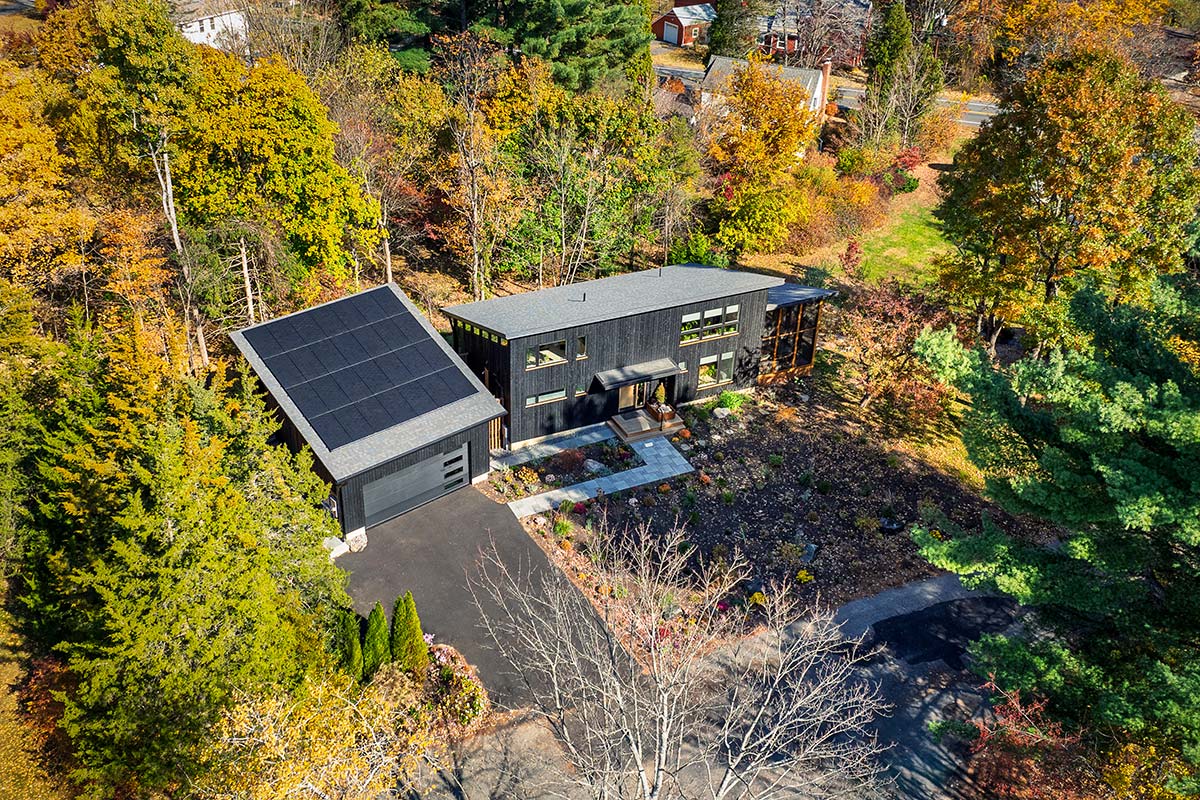
- Solar and other renewables, when the site supports them
We match the level of intervention to the project. Not every home needs the same measures, but every home benefits from clearer thinking about energy and comfort.
Envelope First: Keeping Heat Where It Belongs
The building envelope is the part of the house that separates inside from outside. It includes the walls and roof. It also includes the foundation, plus the places where openings interrupt the structure, like windows and doors. When it’s insulated and sealed well, the house feels different. Fewer drafts. More even temperatures.
In practice, this can look like:
- Adding continuous insulation during an exterior renovation
- Air sealing critical joints and transitions while walls or roofs are open
- Choosing window and door units with appropriate performance for the orientation and exposure
- Addressing basement or crawlspace conditions that feed cold into the rest of the house
These steps are not always visible when the project is finished. You tend to notice them on a January night or a humid August afternoon, when the house simply feels more even.
High-Performance Projects, Applied Practically
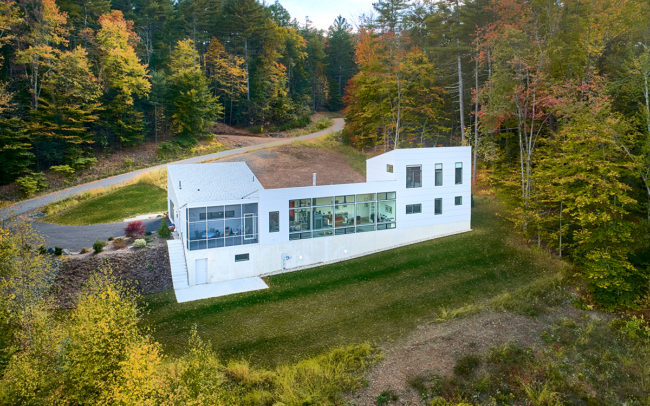
Integrity’s involvement in high‑performance work includes a Passive House–certified project in the Pioneer Valley and our collaborations with New Hampshire’s Bensonwood Homes on highly energy efficient homes here in the Valley.
Those projects pushed envelope performance, air tightness, and mechanical design well beyond standard code levels. The lessons from that work now guide day‑to‑day decisions on more typical homes: where extra insulation matters most, how to detail window openings, what to expect from different mechanical approaches, and how to plan for future upgrades even if everything cannot happen at once.
We do not assume every client wants a certified project. We do assume that every client benefits from a more thoughtful building.
Better Performance, Built Into the Work
Consider a typical renovation or addition. The first goals are usually space, light, or layout.
Energy performance can feel like a separate topic. Given that a renovation entails having the walls opened, it’s best to address this in the design & planning phase for the work.
That’s when small choices matter. Exterior insulation can only go in when siding or drywall come off. Air sealing happens when framing is exposed. Window upgrades make the biggest difference on the most exposed sides of the house. Overhangs and shading can help with summer glare.
The project still stays focused on the space you want. The house just runs better when it’s done.
Comfort, Sound, and Light
Good envelopes and systems change how a house feels. Fewer drafts mean you do not avoid certain chairs in winter.
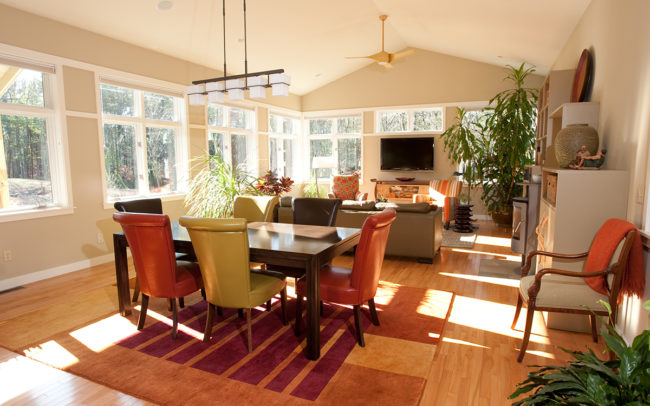
Better windows and insulation can cut down on outside noise. Shading and orientation help with glare. Daylight still matters.
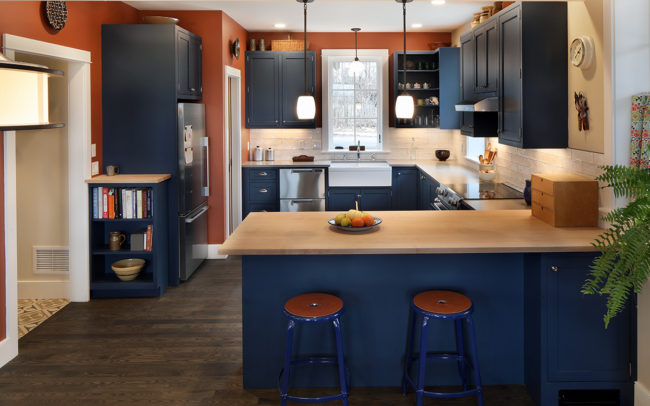
We look at where you spend time in the house. Kitchens, living rooms, bedrooms. Those spaces should feel even and comfortable across the seasons.
Most of the work is hidden once we close things back up. You notice it later. Less fiddling with the thermostat. The house just feels easier to live in.
Energy Use and Operating Costs
Using less energy is rarely the only reason someone calls us, but it is a steady concern.
Efficient envelopes and systems reduce heating and cooling loads. That matters in this climate. It can also help with operating costs, especially when energy prices jump.
We do not promise specific savings without proper modeling. We still pay attention to upgrades that tend to hold their value.
When a project calls for more detailed analysis, we can coordinate with an energy modeler as part of the design process.
Comfort You Can Feel Day to Day
Common Places We Improve Performance
Energy-conscious design can be part of many types of projects. It does not have to stand alone as its own category.
Here are some of the areas where we often fold these ideas into our work.
- New custom homes and major additions
- Window and siding projects that open up the exterior envelope
- Deep kitchen and bath remodels where walls and ceilings are already exposed
- Basement and attic work that affects how the house holds heat and sheds moisture
One Team Coordinating Design, Envelope, and Systems
Energy and sustainability choices cut across many parts of a project. Designers, builders, and trade partners all influence how well those ideas turn into reality.
With design-build, the same core team:
- Talks through performance goals with you at the start
- Aligns those goals with budget and scope
- Coordinates insulation, air sealing, windows, and mechanical planning with the rest of the design
- Works with subs and consultants to carry those decisions through construction
This reduces gaps between what was discussed early on and what ends up in the building. It also gives you a single group to ask when questions about trade‑offs come up.
Clear Priorities
We help you choose which energy and comfort measures make the most sense for your project and budget.
Coordinated Details
Envelope and mechanical decisions are made alongside layout and finishes, not after the fact.
Consistent Team
The people who discuss performance goals with you are involved through the end of construction.
Durability and Materials
A sustainable home is one that holds up over time. We pay attention to how materials perform in this climate, especially where moisture, sun exposure, and daily use take a toll.
That often comes down to practical choices. Siding that keeps its finish. Roofing that fits the pitch and exposure. Interior surfaces that can handle regular wear.
Good detailing matters as well. When assemblies are built carefully, less repairs are needed. More of the building stays intact as years pass.
Designing for Long-Term Use
Energy-efficient design also connects to how a home is used over time.
Comfort and accessibility matter. So does maintenance.
We look at circulation, access points, and service needs as part of performance planning. An efficient house that is difficult to live in or care for misses the point.
The goal is a home that works well now and continues to work as needs change.
Building With a Long View
Sustainability is not only about labels. It shows up in durability, repairability, and how well a home supports the people who live there over time.
We look for choices that reduce waste, avoid short‑lived fixes, and keep spaces usable as needs change.
Are you planning a new home, addition, or major renovation?
If performance is part of the goal, it’s worth addressing early in the design process. That’s when decisions about envelope, systems, and layout have the greatest impact.
Our design-build team can review your project and talk through what makes sense for the scope.